


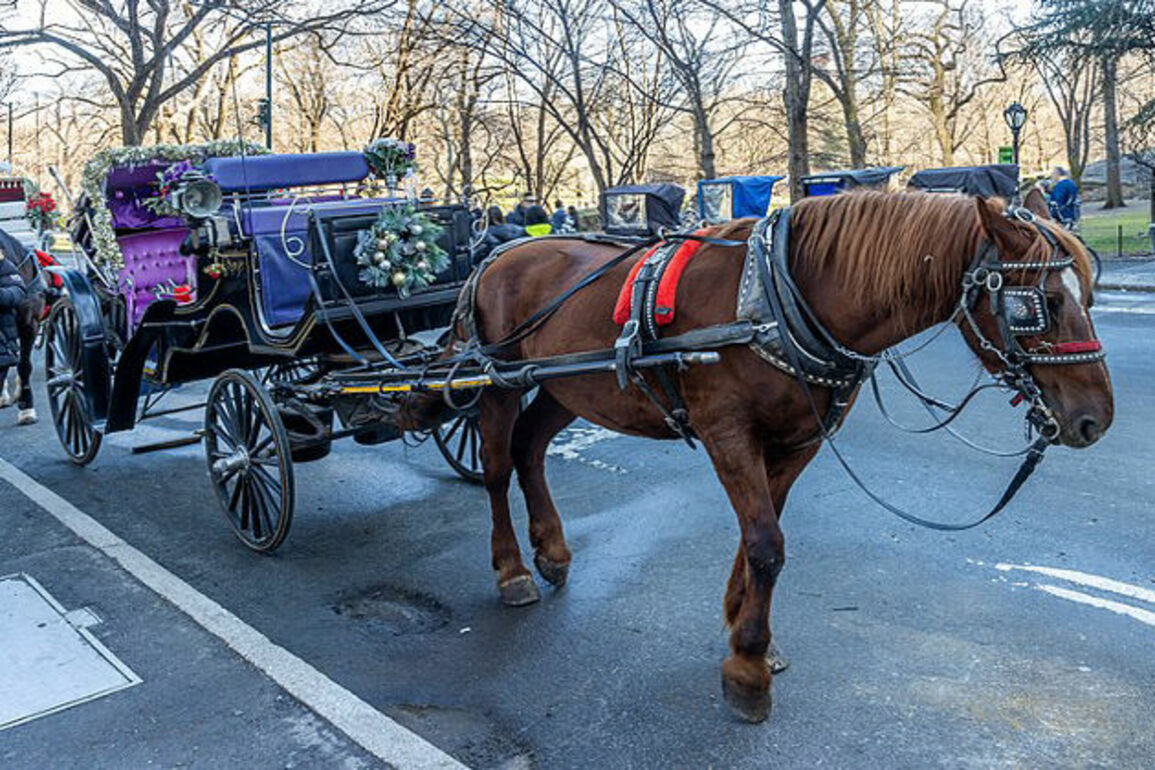
NEW YORK CITY, New York: A New York City carriage driver went on trial this week in a case that has reignited long-standing tensions over the city's iconic but controversial horse-drawn carriages.
Ian McKeever, 56, is facing a misdemeanor animal cruelty charge after his horse, Ryder, collapsed in Manhattan during a sweltering August afternoon in 2022. Prosecutors allege McKeever continued to work Ryder in 84-degree (29 degrees Centigrade) heat despite visible signs of exhaustion, ultimately pushing the horse past its limits.
"The defendant chose to press on, business as usual, and overwork Ryder," prosecutor Taylor Maurer told jurors in her opening remarks. Ryder survived the fall but was euthanized months later due to ongoing health issues.
McKeever, who has worked as a carriage driver for three decades, has pleaded not guilty. His defense lawyer, Raymond Loving, argued the horse was not overheated and had received proper care. He claimed Ryder's collapse was the result of a stumble, not overexertion.
The trial comes amid a broader debate over the future of horse-drawn carriages in New York. The tradition, which dates back over 150 years and features prominently in films and tourist brochures, has become a flashpoint for animal rights activists. Critics say the practice is cruel and outdated, citing instances where horses have panicked in traffic or collapsed on the job.
Supporters argue that carriages are a cherished part of the city's cultural fabric. They provide livelihoods for drivers and homes for retired race and farm horses, many of whom would otherwise face slaughter.
Ryder had been working in Central Park for more than seven hours on the day of his collapse, according to prosecutors. Witness Caroline Londahl-Smidt testif